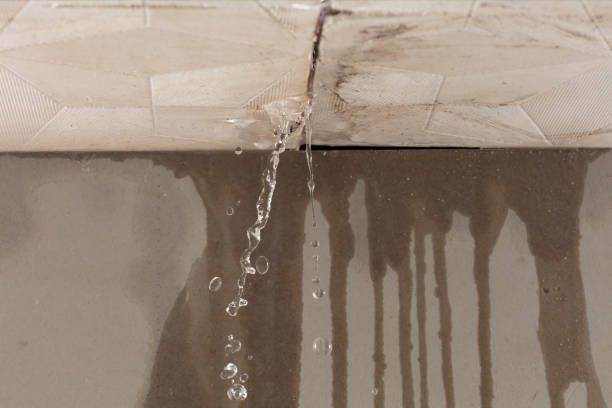
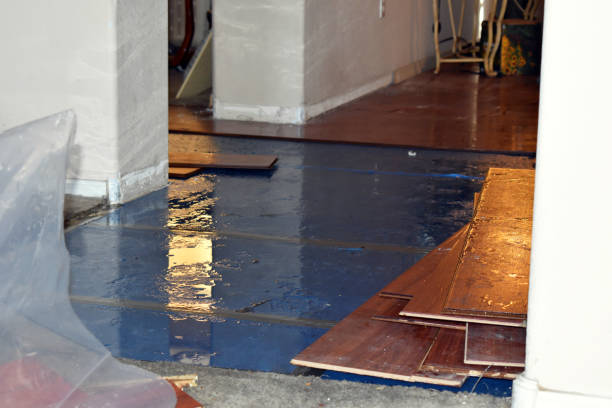
There's a specific kind of dread that comes with standing water spreading across a Denver living room floor. We're built to shorten that window between the panic and the fix.
Call +1-844-578-1604
Crews staged inside Denver limits
Written estimate, no hidden line items
IICRC-certified technicians on every truck

We run our Denver operation on IICRC-certified technicians and commercial-grade equipment, not a subcontractor list we pull from when the phone rings.
Our Denver dispatch desk is staffed around the clock by people, not an automated queue, which matters most at exactly the hour you're calling.
We also keep documentation formatted the way insurance adjusters actually want to see it, since most of our jobs end up crossing an adjuster's desk at some point.
Water damage rarely starts as a dramatic flood — it usually starts small, and these are the signs worth acting on before the damage spreads further.
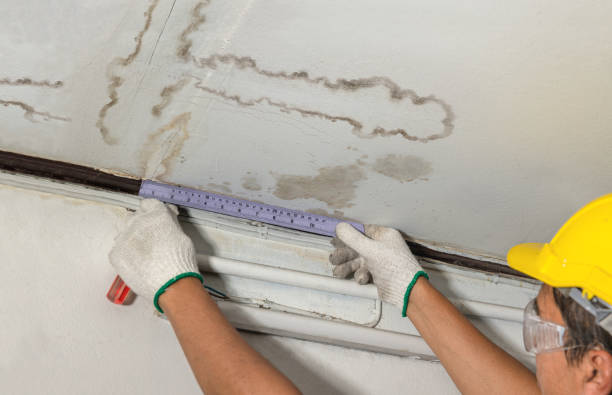
Fresh paint over an old stain can hide the problem visually for a month or two, right up until the drywall paper backing gives out.
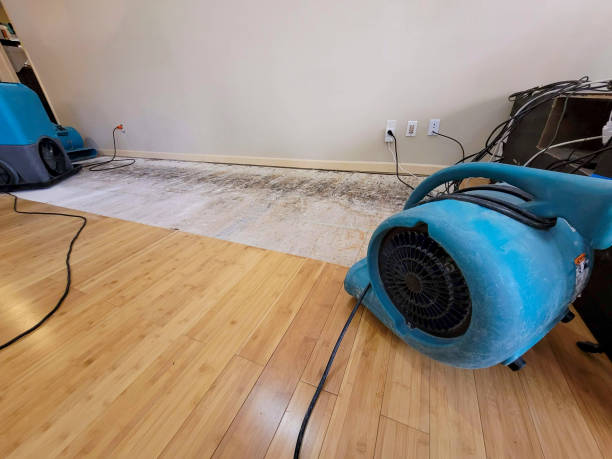
If a dehumidifier and open windows don't clear the smell within a day or two, there's an active moisture source that ventilation alone won't solve.
A hollow sound from tile that used to sound solid usually means the mortar bed lost adhesion from sustained moisture underneath.
Catching a hidden leak through the water bill is far cheaper than waiting for it to surface as a flooded room.
Bubbling paint near a baseboard or exterior wall usually means moisture is pushing through from behind rather than a simple application defect.
A small patch of mold in a corner or along a baseboard means conditions behind that surface have supported growth for a while — the source needs to be found, not just wiped away.
If more than one of these sounds familiar, it's worth a professional moisture check sooner rather than later.
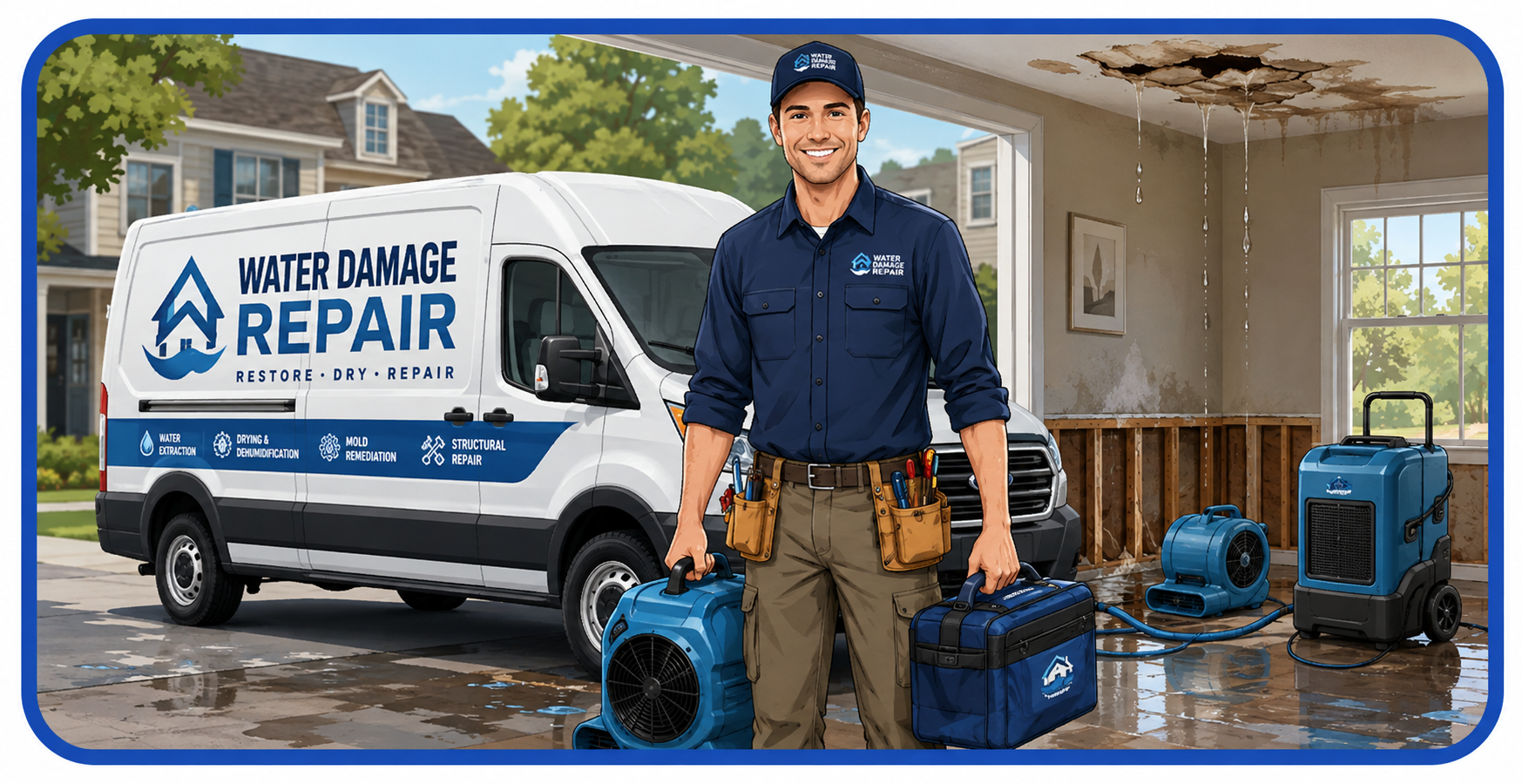
We don't split Ceiling Water Damage Repair into separate vendors for extraction, drying, and repair — one crew stays accountable for the whole job, from the first wet-vac pass to the final coat of paint.
Every service below gets the same documentation standard, whether it's a single wet closet or a full commercial loss.
The first hour after a water loss decides how much of the structure is salvageable, which is why extraction is always the first truck-mount job, not an afterthought behind paperwork.
We don't call a structure dry based on a visual check — the moisture meter has the final say before equipment comes down.
Our sewage cleanup protocol follows IICRC S500 guidelines start to finish, including isolation of the affected zone and disposal documentation.
If mold has already started, containment with negative air pressure goes up before any demolition begins, so spores don't travel to unaffected rooms.
Once moisture readings confirm the structure is dry, the same team that documented and dried the loss hands off directly into drywall, insulation, and flooring repair.
Furniture, electronics, and documents get assessed on-site, with salvageable items cleaned and stored while the space dries.


This is the same sequence every job follows, whether it's a single flooded room or a full commercial loss.
Real person, real questions, fast routing — the goal is getting a truck moving within minutes of hanging up.
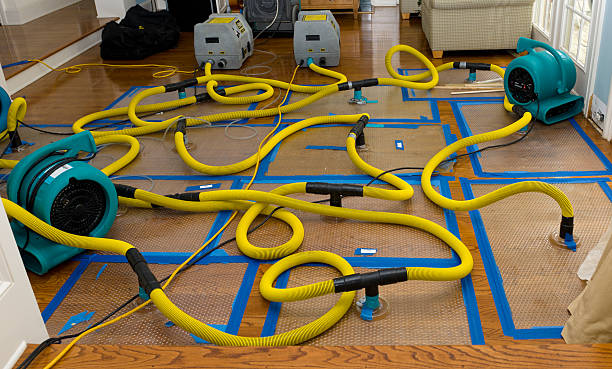
Moisture meters and thermal cameras trace exactly how far water has traveled, including inside walls and under flooring where it's invisible to the eye.
Extraction and drying run as one continuous process rather than two separate scheduled visits.
Every affected area gets re-tested before we call the job complete — no shortcuts on the sign-off.
None of these four things matter in isolation — it's the combination of licensing, speed, honest pricing, and a real guarantee that actually changes the outcome of a water emergency.
Every technician carries IICRC certification, and every crew works fully insured — documentation available whenever you want it.
A nearby crew isn't a slogan — it's the gap between drying equipment running in an hour versus half a day.
We'd rather have the pricing conversation upfront than after the job's already underway.
If a drying target isn't hit on schedule, equipment stays on-site at no extra charge until the readings confirm it's dry.
Every job closes with documented moisture verification, because a promise without data behind it isn't much of a promise.
Technicians aren't rewarded for closing jobs quickly, which keeps the incentive pointed at actually finishing the drying right.
Call +1-844-578-1604Whether your address sits in 50622 or a neighboring zip, the same crew and the same response standard applies.
We track call patterns by zip code across Denver to keep crew staffing matched to where emergencies actually happen.

"I've dealt with contractors before who talk a big game and disappear. The crew here in Denver actually showed up on time and stayed in touch through the whole drying process."
Renee A., Denver"They found mold starting behind our baseboards before it spread and handled containment properly instead of painting over it like a previous company tried."
Owen D., Denver"The sewage backup in our basement bathroom got the full PPE-and-disinfection treatment, and they walked me through exactly why certain materials had to go."
Fatima J., Denver"The reconstruction crew matched our original flooring almost exactly after the repair — you'd never guess there was ever a leak."
Lucas P., Denver"The thermal scan caught damage behind a cabinet that could have turned into a much bigger mold problem if it went unnoticed."
Grace T., Denver"They sectioned off the wet area instead of shutting down the whole office during drying, which kept us operating almost normally."
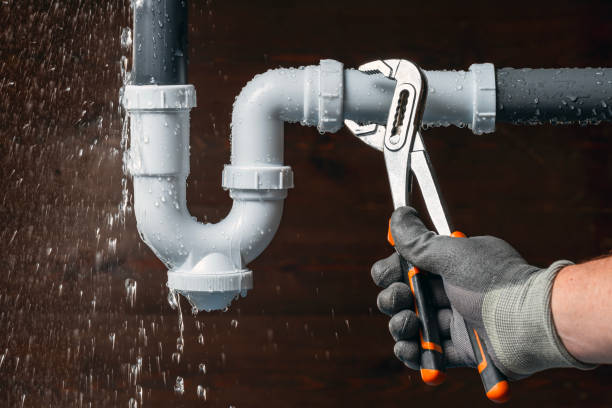
Nathaniel W., Denver"A cracked supply line under our kitchen sink went unnoticed for days, and by the time we called, the subfloor was saturated. They only replaced what actually tested wet, not the whole floor."
Bianca H., Denver"Storm runoff got into our crawl space and the smell alone told us something was wrong. They found a failed vapor barrier and fixed the actual cause during the same visit."
Derek S., Denver"They found the actual source of the leak instead of just drying the surface damage, which saved us from the same problem happening again in a month."
Melissa C., Denver"Being out of town when it happened was stressful enough — having a crew that could work directly with our property manager made it manageable."
Victor N., Denver